RESEARCH
Target Audience
Parents (and their family)
The target audience of the Las Vegas Flying Aces is parents who wish to spend more time with their kids and grow their family. Research from the World Population Review (2024) suggests newer sized families, two parents with one or two children, are becoming more common in the Las Vegas area. Analysis of the age group sizes show that kids, teens, and parents in their 30s and 40s are the largest, and there will naturally be a better chance for the brand to appeal to this demographic. Thompson (2024) suggests that parents in the Vegas area consider the quality time with their kids as a major ‘purpose’ and personal need, mostly spent doing outdoor activities. Therefore, the brand seeks to target the psychographic of active parents that want to spend time with their kids and others beyond their homes.

Benefits and Features


Affiliation and Group-Focused Entertainment
Though the family demographic is becoming more popular in Las Vegas, this unfortunately clashes with McNamee’s (2024) and Nomads Unveiled's (2024) suggestions that the primary sources of entertainment are adult-oriented. Analysis of this research is what drives the brand to make affiliation its primary benefit, as the families of Las Vegas may not have any sense of affiliation with their hometown at all. Additionally, the exponential growth of the Las Vegas area drives neighborhoods farther away from the downtown gambling city, meaning that residents of greater Vegas may associate with its culture even less (McNamee, 2024).
Felton (2013) defines one of the many needs a brand can fulfill in an audience is affiliation, which is pride and social interaction with others in the community. Because of the conflict between the target audience and local culture, the brand has a goal to define how the target audience can positively affiliate with their hometown and others in a local, social environment. Through a brand personality that is inclusive and encouraging, the Flying Aces focuses on ensuring the audience has ways to bond with each other by focusing on group activities, like community events and group packages.
Brand Theme & Name
Patriotism and Camaraderie
Because the brand has a duality to its audience, the brand required themes that can resonate with adults and kids alike while allowing families to positively associate with Las Vegas. Las Vegas has various historical connections, like construction of the nearby Hoover Dam, neon lights on the strip, and roots to the mob; however, the city is often associated with the adult-oriented entertainment (McNamee, 2024). Additionally, Las Vegas is home to the adjacent military base, Nellis Air Force Base, which has connections to training pilots for WWII and is resided by the Thunderbirds flight demo team. The base also remains a major influence for bringing families to the area as one of southern Nevada’s largest employers (U.S. Air Force, 2023). An examination of U.S. military branches unveil they constantly reference excellence, encouragement, inspiration, patriotism and teamwork (U.S. Army, 2023; Air Force, 2024). Because of the indelible influence of the American military on Las Vegas, these ideas are used as inspiration for the patriotic themes and personality of the brand, and serve as relevant values for parents to instill in their children.
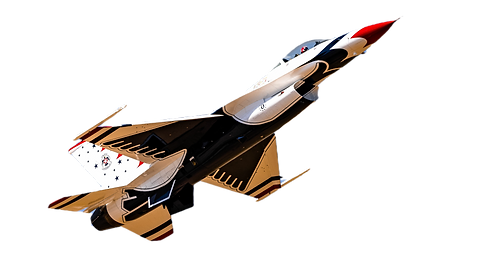
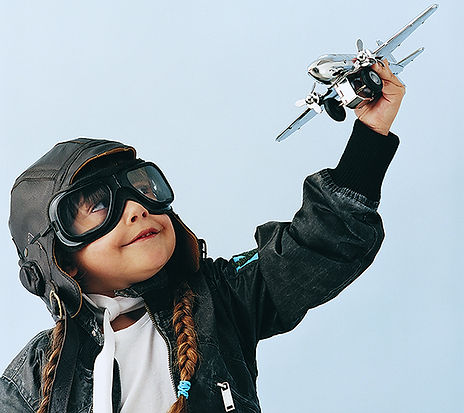
Further study of military language, terms, and historical figures to develop a brand name led to discovery of terms of Air Ace, or Flying Ace, mostly given to achieved dogfighter pilots of the 20th century (Smithsonian, 2008). Analysis of these achieved pilots reveals how relatable they are as human beings, normal people with diverse backgrounds (Fraser, 2016). The Smithsonian (2008) also reveals that there were different ways to achieve ace status over history, like multi-piloted aircraft that split their target kills per aviator, so the essence of teamwork remains relevant to the symbolism of being a Flying Ace. Therefore, the brand takes on this title and a voice and tone of an encouraging leader to connect back to 20th century pilots that demonstrated the courage and potential within all. By rooting the brand theme and name in relevant history and inspiration, the Americana style of the brand appeals to both parts of the audience and redefines the association with Las Vegas.
Color Palette

Red, White, and Blue
With the continuous expansion of the Las Vegas area and suburban neighborhoods, it arguably becomes the epitome of the American dream. Because this dream is represented by the country’s stars and stripes of the flag, a symbol of unity, the brand derives its primary colors from this idea (U.S. Dept., 2020). Adams & Helfand (2017) also recognize that the meaning of red in Western societies derives from its accompanying colors. It’s often associated with energy and passion alone, but accompanied with blue, a color representative of honestly and loyalty, and white, it properly matches the type of inclusive and dynamic personality the brand intends to exhibit (Adams & Helfand, 2017). This color scheme is similarly used by the Thunderbirds flight team, so it directs the audience to a positive association with Las Vegas.

Typography
Nostalgic Military Fonts
The aviation specific military style of the brand guides the typographic choices to reminisce on typefaces of the mid-20th century. Though many different design movements came to fruition in the middle of this century, bold typefaces and shapes were dominating print mediums (Meggs, 2024) The heading typeface, Komu, is described by its creator as similar to Socialist era Czechoslovakia billboard lettering (Filípek, 2024), which ties the font in with the nostalgic era the brand connects the present with. The type is bold with curved corners that soften its command, chosen to keep the Flying Aces approachable but evocative of the era.


Additionally, typography painted on the aircraft themselves reflected the boldness of Komu or occasionally heavily stylized to match the personality of the crew or painted characters on the aircraft nose (Warhawk Air, 2018; Galambosova, 2024). Therefore, the cursive font of LaSalle supports Komu in order to create stylistic differentiation but also reflect back to World War era aircraft nose art. The military historically has used typewriters for correspondence, still used today for less formal occasions, and known as Courier New (Dept. of the Navy, 2015). Because of its historical roots and use for lengthy text, similar typeface Courier Prime takes on its role.


Logo and Brand Assets


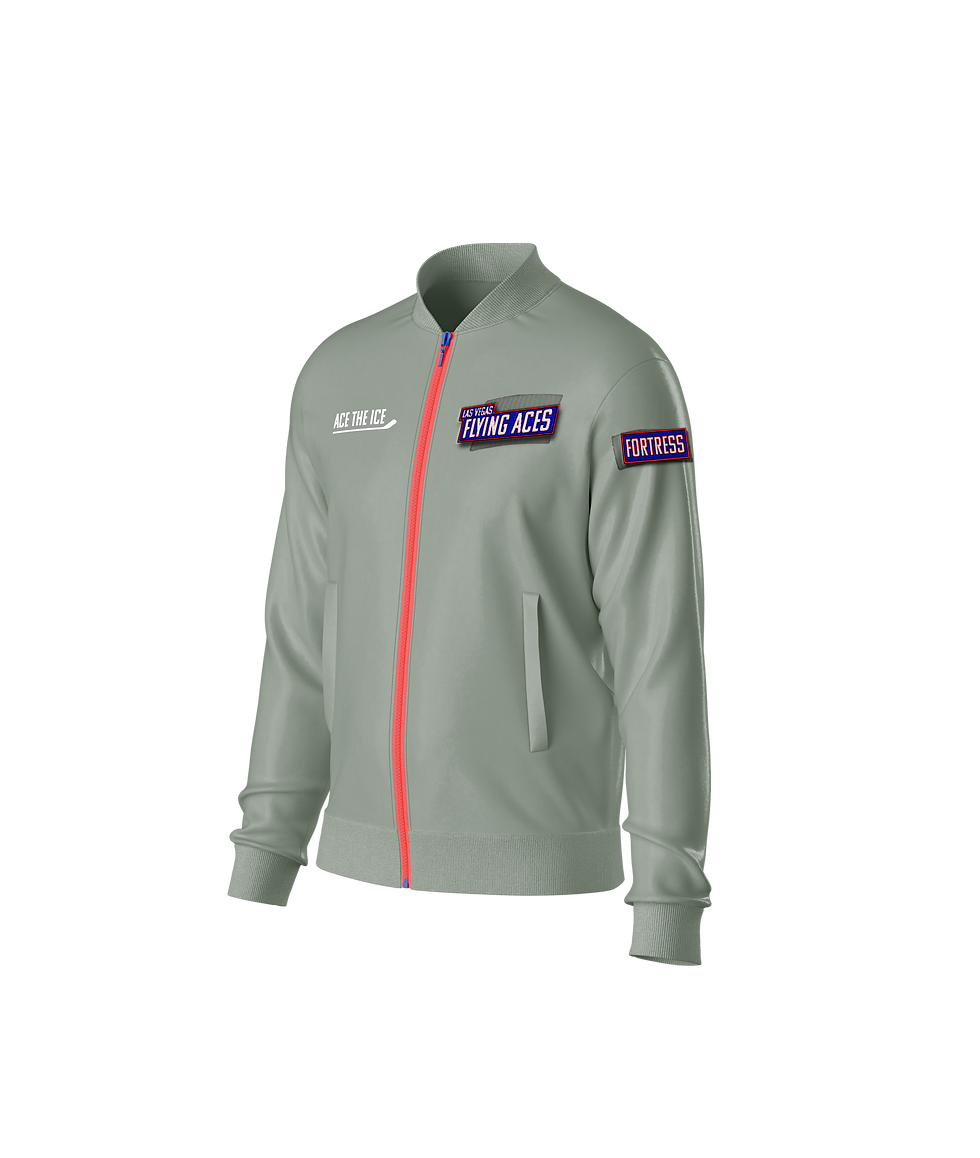
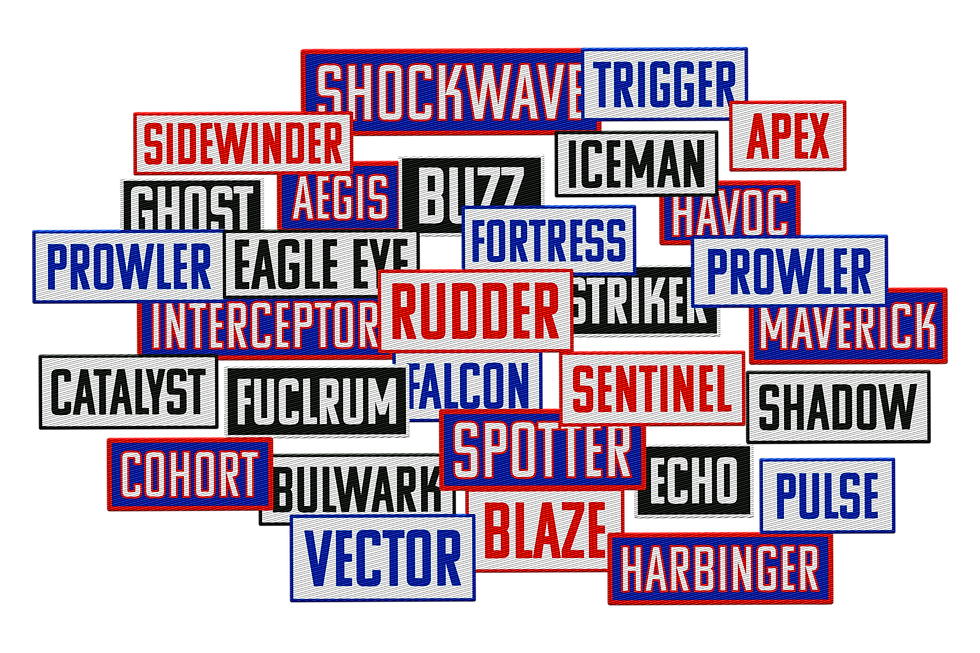
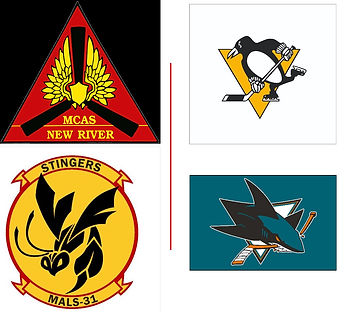
McWade (2019) suggests that icons and logos can be successful and comprehensive when reduced to their basic silhouette and shape. Using the silhouette of a jet in the brands case (for its drop shadow and single color versions), it easily communicates the connection to aviation themes. This is also proven through the use of various military badges and unit emblems patches (Alex, 2024). The Flying Aces logo takes on a similar look by using the silhouette of a modern jet and the clean typography with energetic shapes. Furthermore, this allows the brand to use the logo(s) and personal identity tags as customizable pieces across the generic merchandise. Pilot styled bomber jackets and baseball caps attach various badges to integrate hockey and aviation styles.
Patches, Bomber Jackets, and CallSigns
The Flying Aces are created as an expansion team of the East Coast Hockey League (ECHL), so it’s merchandise and logo will remain similar in style to the generalizations of other teams. This includes team jerseys, shirts, hats, and more, but this leaves the challenge for differentiation. Because the team is aviation rooted, the choices made for distinction is based upon aviator attire and items. The military uses a wide variety of small devices for certain kinds of recognition, to include unit affiliation, identification, and personal accomplishments (U.S. Army, n.d.).

References
Adams, S., & Helfand, J. (2017). The designer’s dictionary of color. Abrams.
Air Force. (2024). It’s our promise to protect. Vision and Creed - U.S. Air Force. https://www.airforce.com/vision
Alex, A. (2024, May 16). US army aviation patches: a guide to history and collectibles. News Military. https://newsmilitary.com/us-
army-aviation-patches-a-guide-to-history-and-collectibles/
Department of the Navy. (2015, June) Correspondence Manual (SECNAV M-5216.5).
https://www.marines.mil/Portals/1/Publications/SECNAV%20M%205216.5.pdf
Felton, G. (2013). Advertising: Concept and copy. W.W. Norton & Company.
https://bookshelf.vitalsource.com/reader/books/9780393733921
Fraser, C. (2016, April 15). Top 10 U.S. fighter aces of World War II: War history online. warhistoryonline.
https://www.warhistoryonline.com/featured/top-10-u-s-fighter-aces-word-war-ii.html
Filípek, J. (2024). Komu from DizajnDesign. Komu | Adobe Fonts.
https://fonts.adobe.com/fonts/komu#about-section
Galambosova, C. (2024, January 15). Nose art – the most unique art by pilots during WWII. DailyArt Magazine.
https://www.dailyartmagazine.com/nose-art-by-pilots/
Nomads Unveiled. (2024, January 26). 25 things Las Vegas is famous and known for. https://nomadsunveiled.com/what-is-las-
McNamee, G. L. (2024, July 7). Administration and Society. Encyclopædia Britannica. https://www.britannica.com/place/Las-
Vegas-Nevada/Administration-and-society
McWade, J. (2019, November 1). The (very!) versatile art of the silhouette - graphic design tips & tricks video tutorial: Linkedin
learning, formerly Lynda.com. LinkedIn. https://www.linkedin.com/learning/graphic-design-tips-tricks/the-very-versatile-art-of-the-silhouette?resume=false&u=50813145
Meggs, P. B. (2024, September 24). Graphic design in the 20th Century. Encyclopædia Britannica.
https://www.britannica.com/art/graphic-design/Graphic-design-in-the-20th-century
Smithsonian. (2008, April 6). What does it take to become an “ace”? Smithsonian.com. https://www.smithsonianmag.com/air-
space-magazine/what-does-it-take-to-become-an-ace-35385936/
Thompson, E. (2024, June 16). “Fathers enjoy fatherhood”: Dads spending more time with their kids. Journal.
U. S. Air Force. (2023, July). Nellis Air Force Base. https://www.nellis.af.mil/About/Fact-Sheets/Display/Article/284174/nellis-air-
force-base/
U.S. Army. (2023, August 4). New Army brand redefines “be all you can be” for a new generation. www.army.mil.
https://www.army.mil/article/264594/new_army_brand_redefines_be_all_you_can_be_for_a_new_generation
U.S. Army. (n.d.). U.S. Army Badges Information. https://veteranmedals.army.mil/home/us-army-medals-award-badges-ribbon-
and-attachments-information/us-army-badges-information
U.S. Department of the Interior. (2020, April 7). National Symbols, Stories & Icons. National Parks Service.
https://www.nps.gov/stsp/learn/historyculture/national-symbols-stories-icons.htm
Vegas.com. (2024). Las Vegas Sports. https://www.vegas.com/las-vegas-events/sports-in-las-vegas/
Warhawk Air Museum. (2018, October 4). A visual history of aircraft nose art. https://warhawkairmuseum.org/blog/a-visual-history-
World Population Review. (2024). Las Vegas, Nevada population 2024. https://worldpopulationreview.com/us-cities/las-vegas-nv-
population